
Three days along the California coast under gray skies
A July 25–27, 2020 journey from the cliffs of Montaña de Oro to Morro Rock, Bixby Creek Bridge, redwoods, and one final beach.
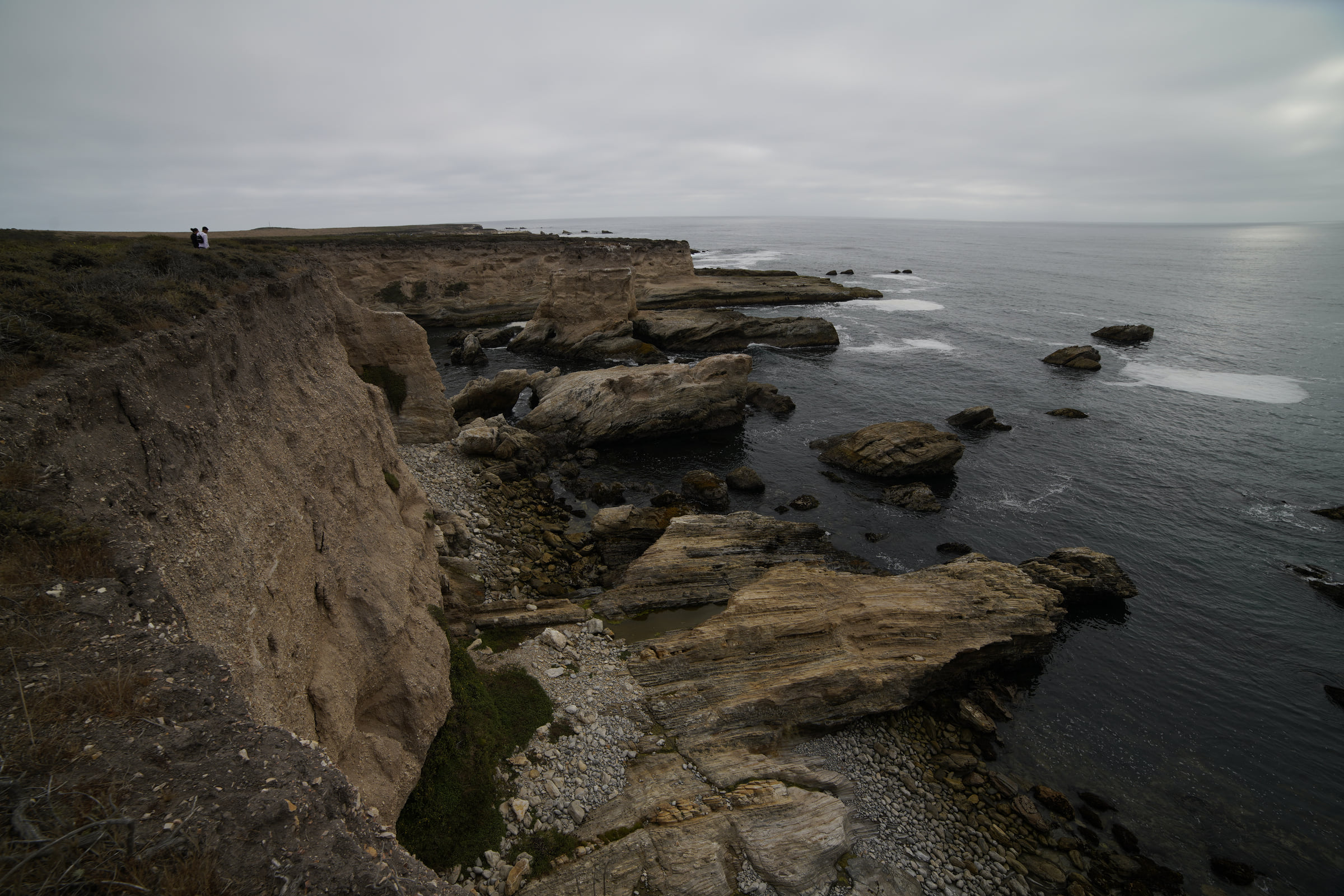
July 25 — The overcast coast at Montaña de Oro
On the first afternoon, dark water and cliffs stretched beneath low cloud. Waves moved through the rocks and withdrew, leaving white lines of foam behind.
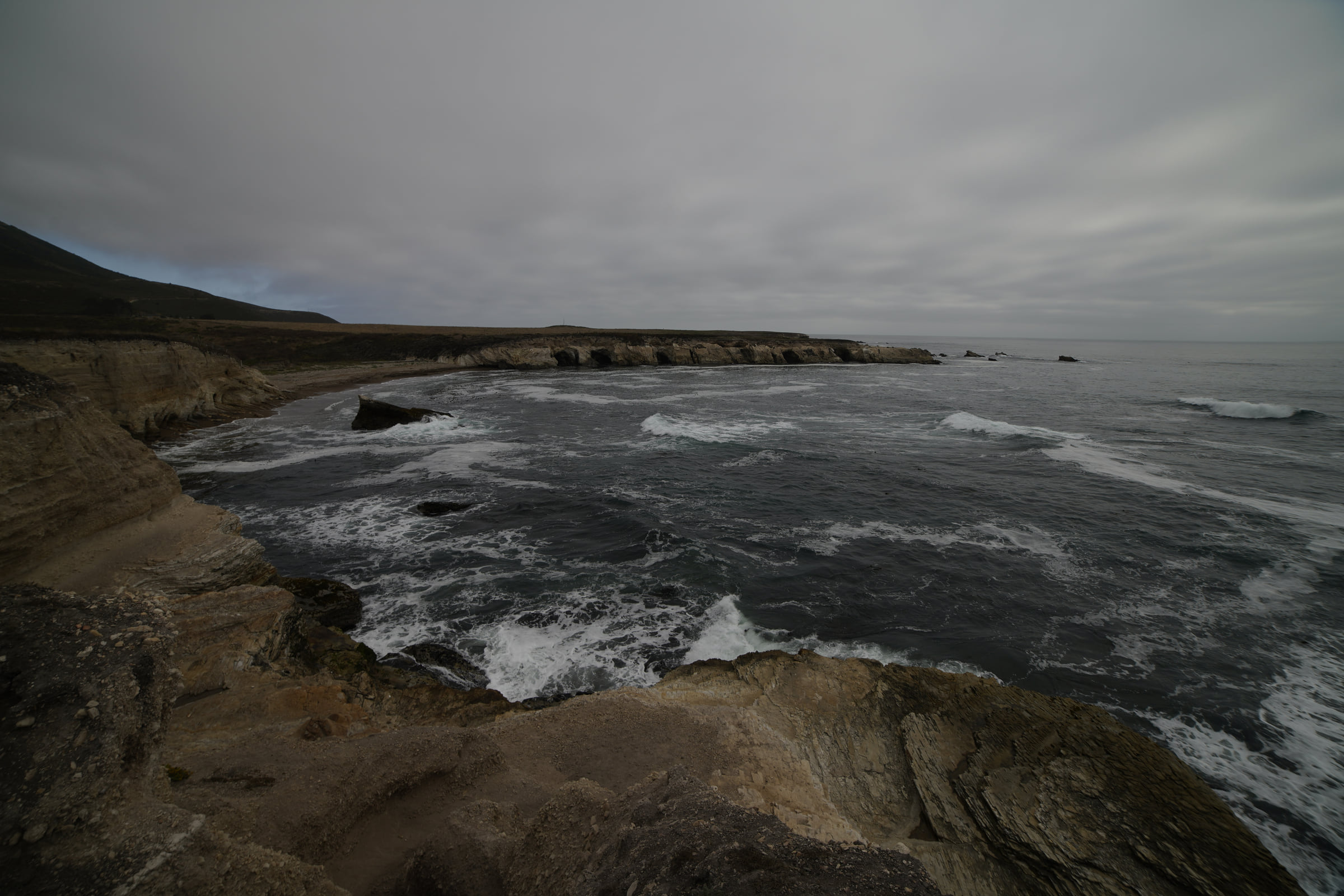
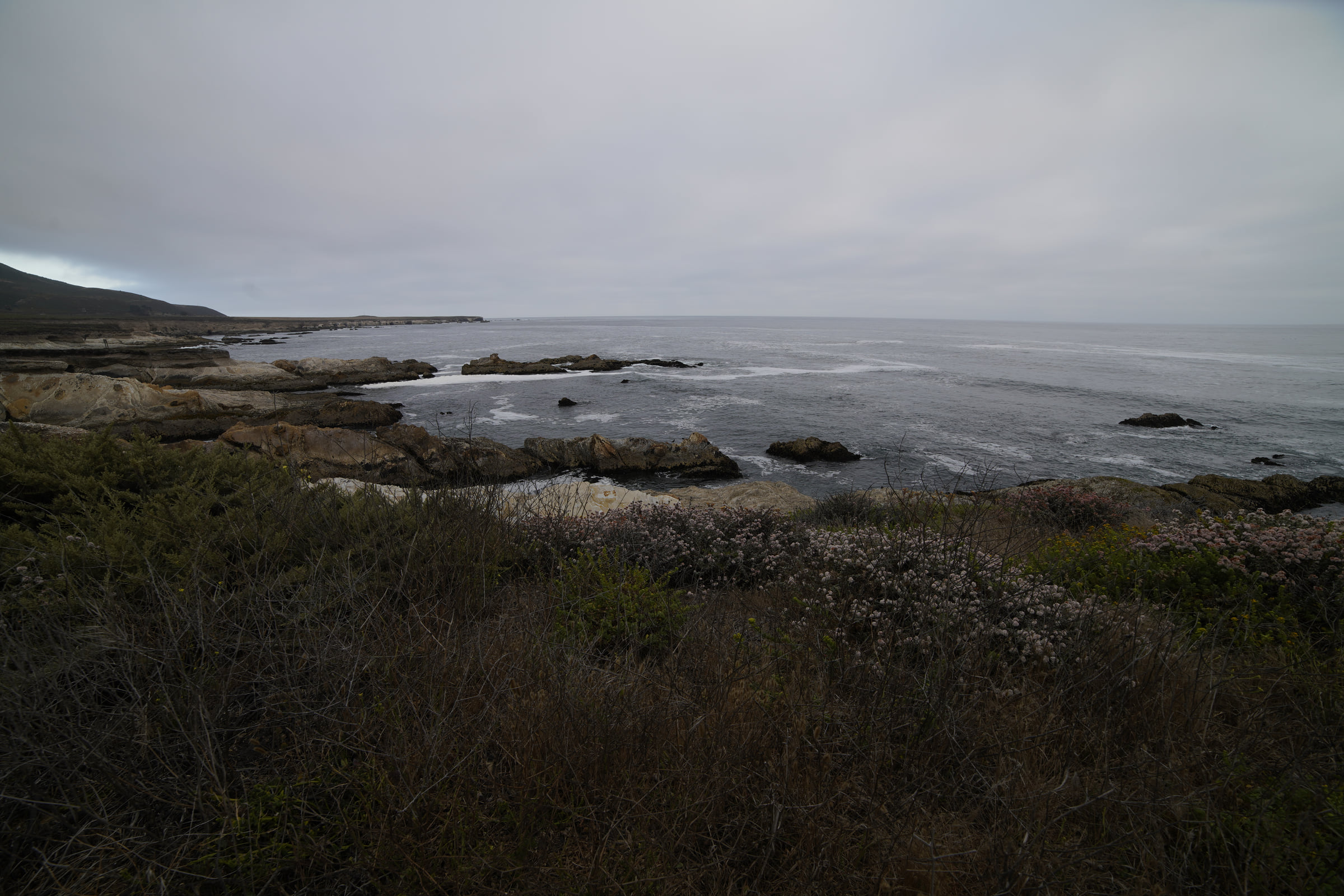
Farther along the coast, long shelves of rock reached into the water. Without bright blue light, the layers of stone and the movement of the ocean became the clearest parts of the scene.
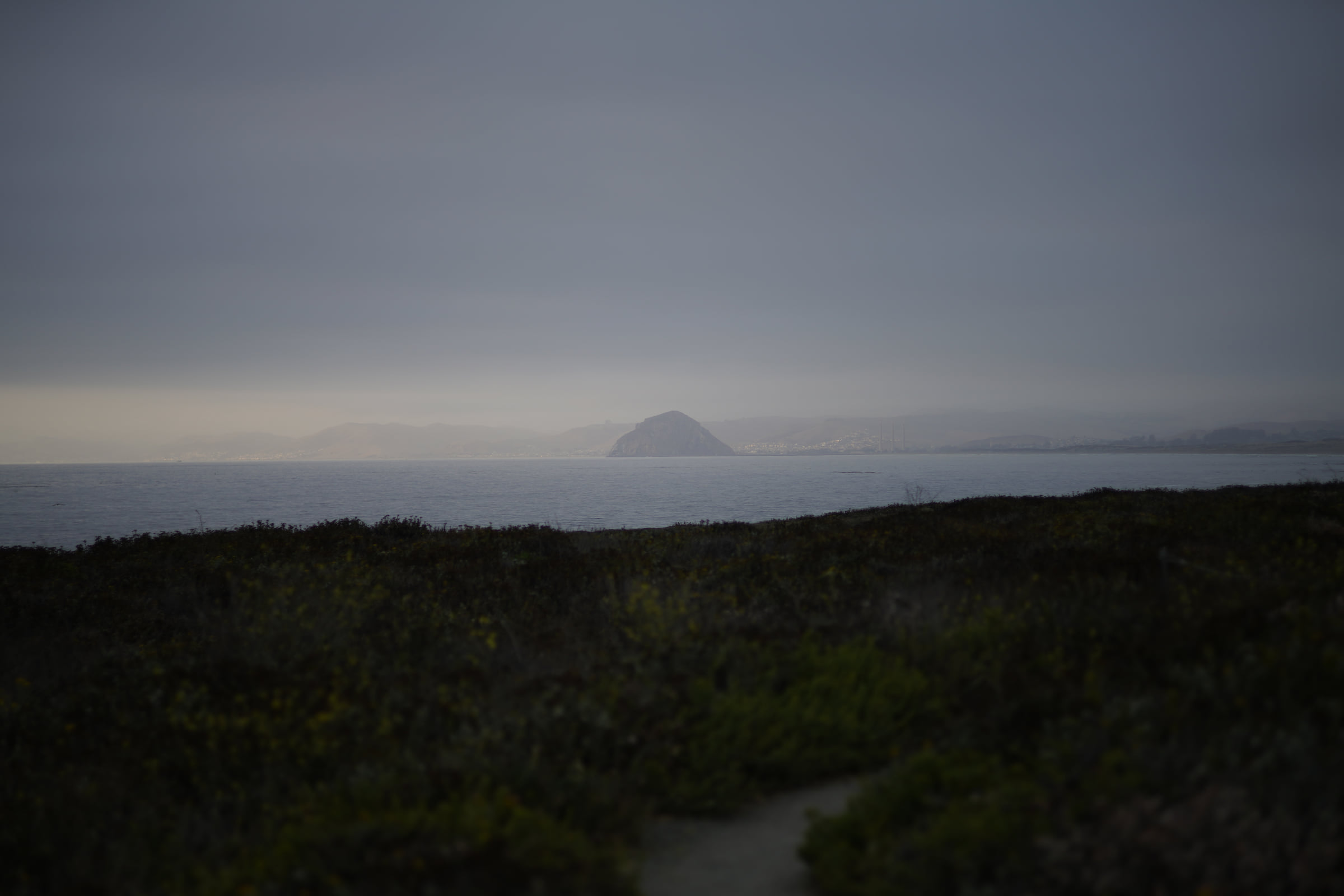
At 7:47 PM, Morro Rock appeared as a faint silhouette through the haze. The cliffs that had filled the foreground all afternoon gave way to a distant view of the coast and town.
July 26 — Morro Rock and the waterline
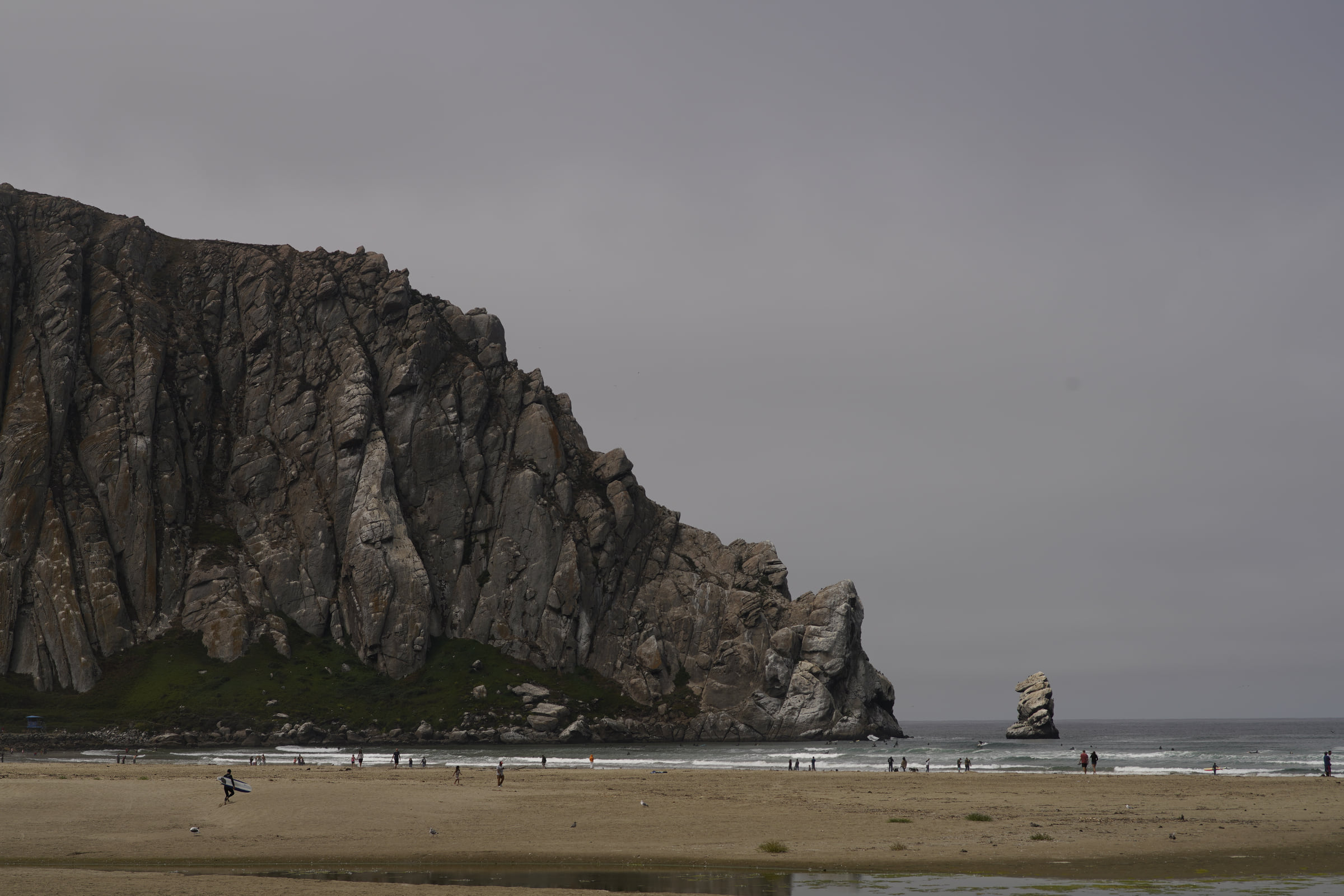
The next morning brought a closer view of the vertical face of Morro Rock. People scattered across the wide beach made the scale of the formation easier to understand.
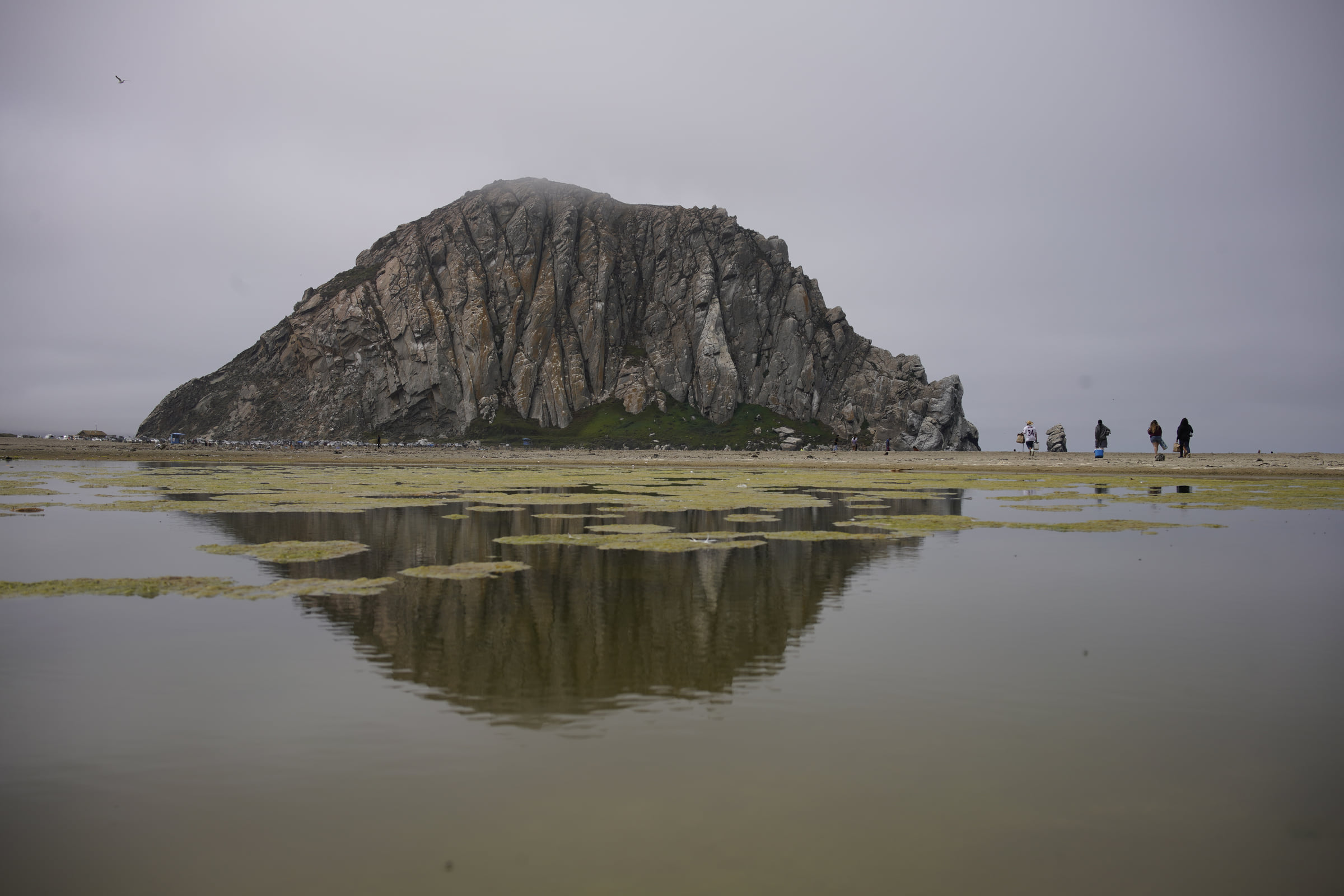
Shallow water reflected both the rock and the gray sky. The same formation felt different as a steep wall and as a softened reflection.
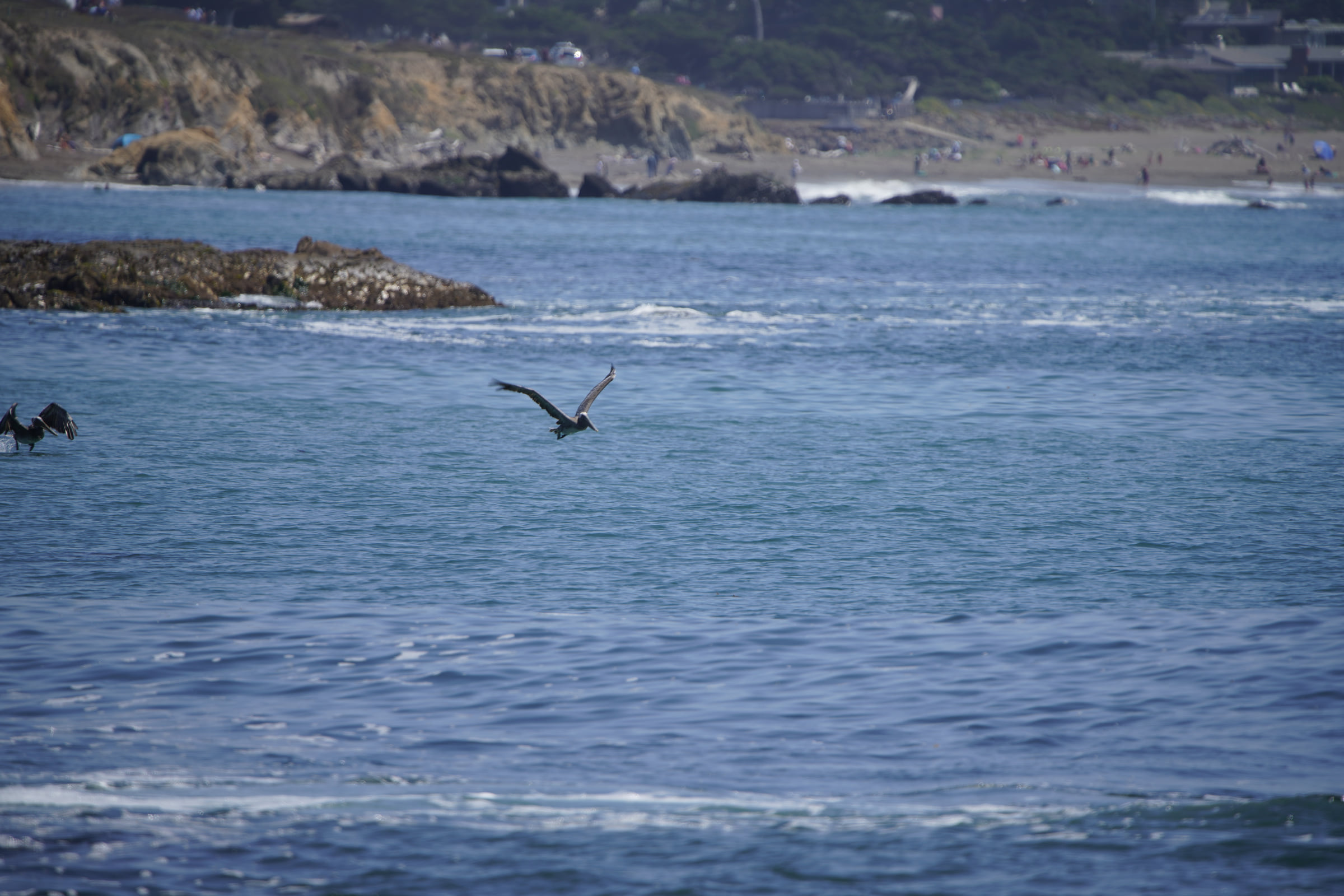
Later in the afternoon, a pelican crossed low over blue water. Unlike the broad, still coast of the first day, this frame was carried by motion.
July 27 — From bridge to redwoods and beach
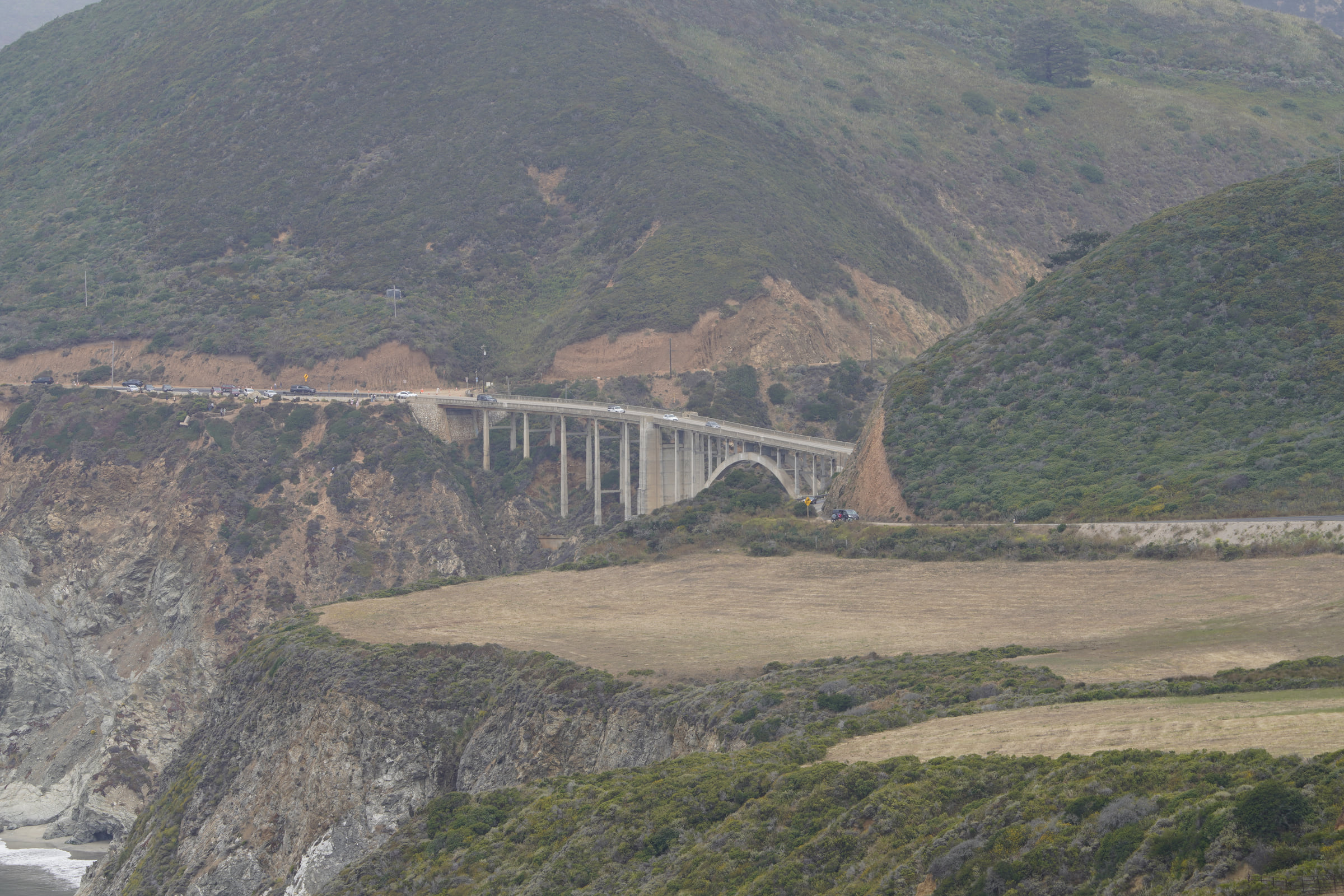
Around midday on the third day, Bixby Creek Bridge appeared in the distance. The road and concrete arch showed the shape of the coastal journey in a single frame.
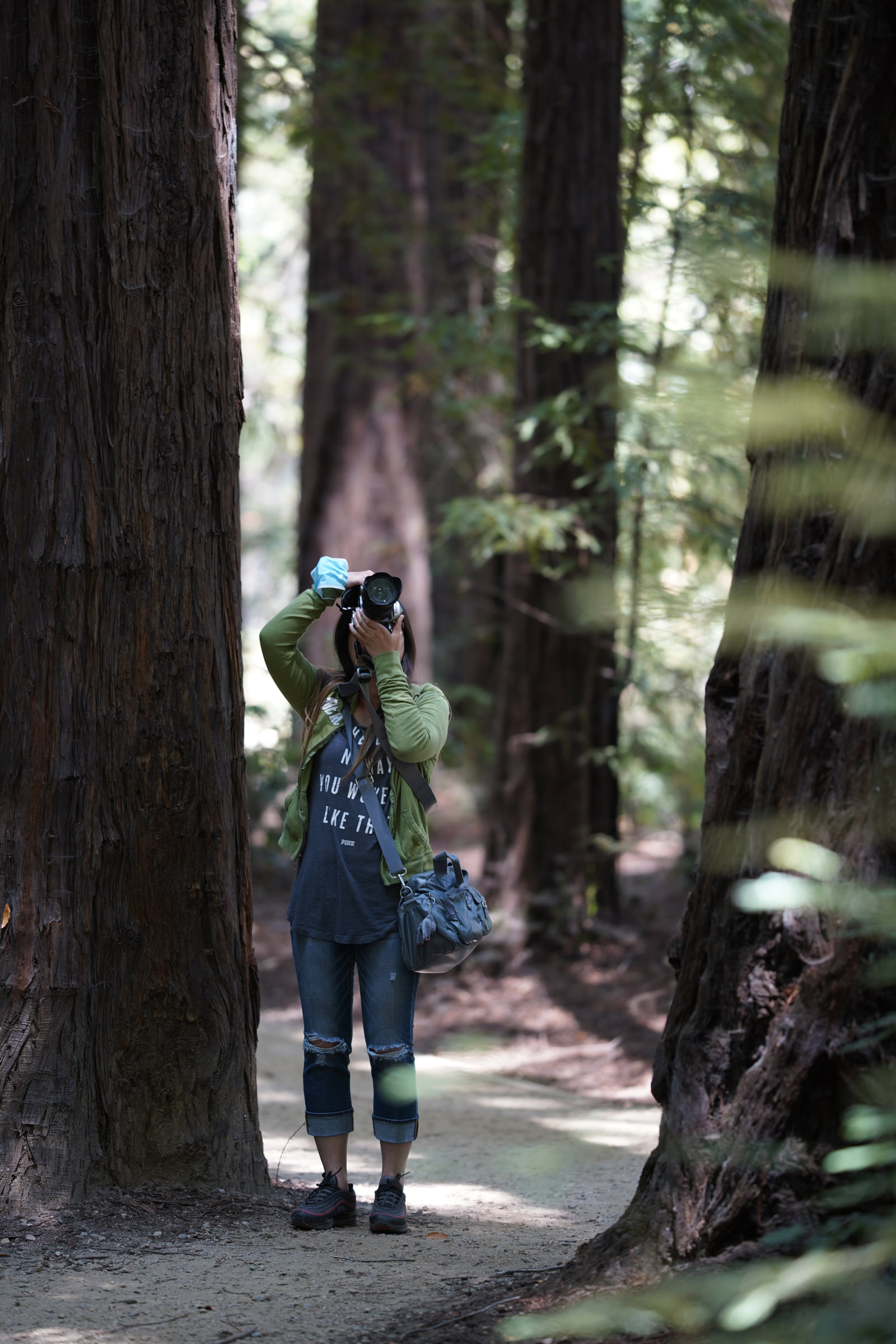
Two hours later, the route moved away from the ocean and into a redwood grove. A moment of photographing each other between the trees became part of the travel record too.
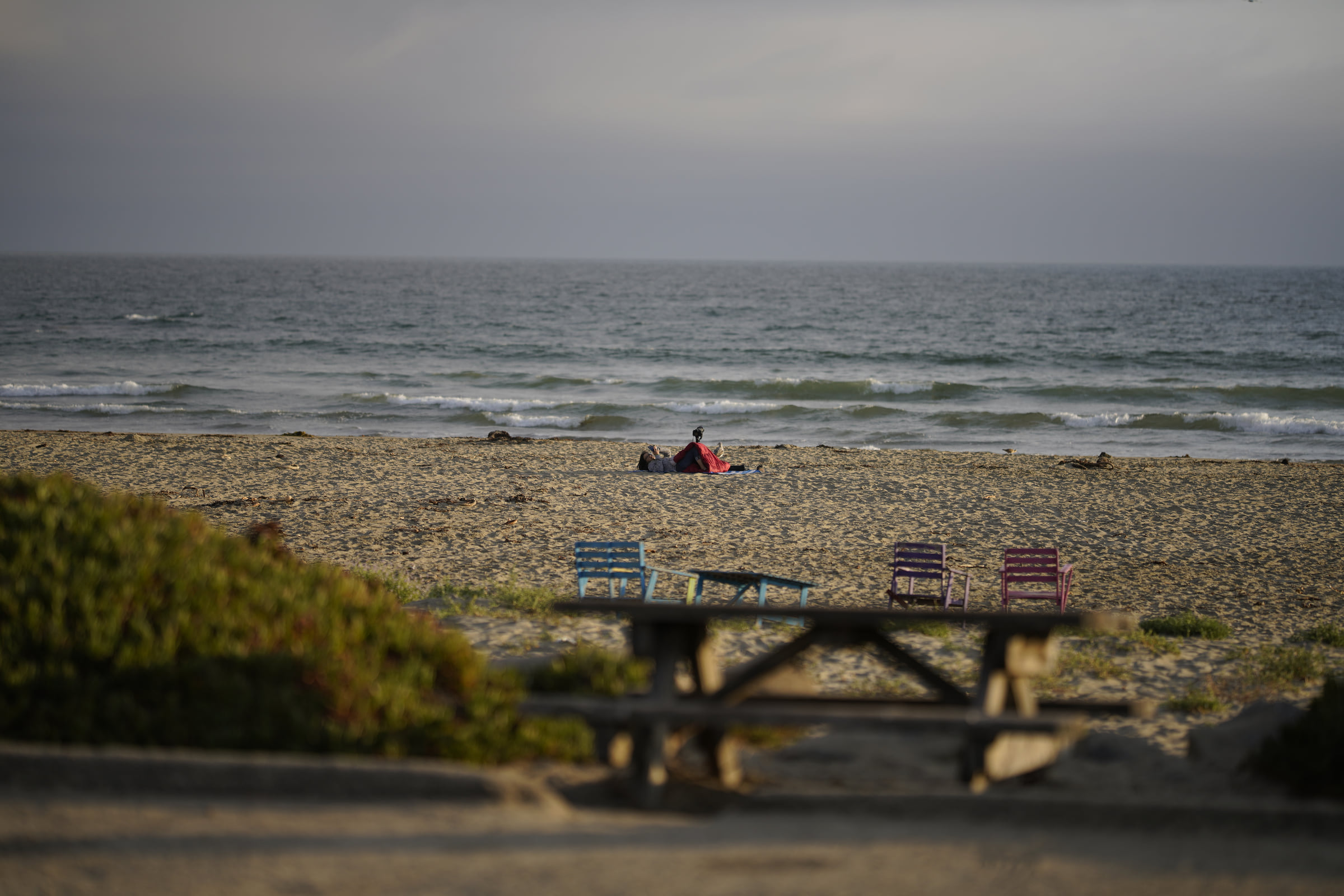
At 7:21 PM, empty chairs faced the beach. Three days of rock, cliff, bridge, and forest ended beside a quiet stretch of sand.
Most of the coast stayed gray during this trip. What changed was the height and distance from which we saw the ocean, followed at the end by the forest. That sequence describes the three days better than any single postcard view could.